
What is Subversion?

There are many legends about the source of the Templars’ wealth. According to Masonic legend, when the Templars came under trial in 1301, their leader de Molay arranged for them to return to Scotland, where, according to Masonic lore, they had brought with them a number of “Eastern Mystics,” referring to the Mandaeans—also recognized as the Sabians—or the radical Ismaili sect of the Assassins of the Islamic world—who were “rescued” from the Holy Land, thus inaugurating the traditions of Scottish Rite Freemasonry.
David Livingstone. Ordo ab Chao.
Who were the Templars? Historically, they were a military order founded in 1118 during the Crusader occupation of Jerusalem. Yet, as with the multiple traditions surrounding Pythagoras, the Templars also acquired a parallel, legendary identity. In later imagination they became a covert network of wealth and influence spanning the Mediterranean, a supposed precursor to a more cosmopolitan and hegemonic Europe.
In general, the study of grand historical conspiracies fails to separate the mythical from the factual. Inevitably, we will be faced with murky periods of history where no clear secret ruling elite can be identified. The Templars represent a kind of island in our understanding of history: They first emerged from a messy and scarcely documented period from which we find the legends of Beowulf, Arthur, and the Niebelung. After their supression in 1312 AD, Europe again returned a period of transition with no unity within the church or amongst the various nobilities. There were multiple popes, no clear emperor, the Black Plague and the Hundred Year war.
The rise of the Templars can only be understood within the context of Rome's consolidation of power over all of Christendom. The crusades had left the Byzantinian empire weakened and had established a new crusader state in Palestine. A new era had begun. After a thousand years, the Holy See had returned to its power over the Holy Land. A long time had passed and the conditions within Europe were severly changed. Was it the Romans returning, or the Christians, or in reality entirely unrelated Germanic warlords with a tacit understanding of Christ, watered down over the centuries? We must assume that it was something entirely new.
The historical veil that shrouds the early medieval world in mystery was similarly affecting the people at the time of the crusades. They themselves were reconnecting to an ancient tradition of which they had little reliable knowledge. Arguably, this mystery is required in order to establish a truly united secret order. The ideas guiding the Frankish, German and Norman kings of the time were an imaginative melange of Hellenistic, Roman, and Christian mythology. The legends of Arthur and Merlin were arguably older pagan stories, translated and syncretised with a more Christian outlook.
For instance, it is commonly known that the German king also considered himself the emperor of Rome. He regarded himself as part of an unbroken tradition that in reality had long withered away. Instead, the Holy Roman Emperor was a Christian simulation of the imperator. The deep empire was only able to reestablish the imperial throne as a limited proxy for its power. The true first stirrings of deep imperial power came with the Templars. Moreover, many crusaders regarded themselves as literal successors of Rome in the sense that they were descendents of Aeneas, the legendary founder of the city. In other words, in their appeal to a mythical past, they made a reference to a myth that had been a mere legend even for the actual ancient Romans.
The crusaders not only occupied Palestine for almost a century, but also held Constantinople for about 60 years. The Byzantine Greeks were initially Christian brothers in the east, asking Rome for help against the Muslims. However, with time the Greeks were regarded as ancient blood enemies, justified by the entirely speculative Trojan heritage of the Frankish kings. Aeneas had to flee Troy because of the vicious Greeks (which was 2000 years ago even for the crusaders). Now the Trojan-Roman warriors of Christ were to get their revenge. Holy LARP.
Despite the various inconsistencies in the crusader's mission, self-identity and overall strategy, the rise of the Templars ushered in an era of cosmopolitism, a radical break from the relative provincialism of the previous period in western Europe. The crusader empire was something radical, an empire justified by the Holy See and by Christ's eternal kingdom in heaven. The ancient ruins of the temple of Solomon were suddenly in reach, the bible came alive after centuries of mythologisation. Just as the priesthoods of the ancient world were engaged in trade and finances, so did the Templar system lay the groundwork for the subsequent European financial networks. Free city states had already begun rising to prominence across the various seas of Europe, but now they were also tightening their relationships by granting credit across large distances, the early stirrings of capital.
Not only the Christian world produced a secret monastic and military order. The Fatimid caliphate was the first Islamic Shiite empire. The Shiites had been driven underground since the fall of their initial grand Imam and caliph, Ali. This way, they had developed a doctrine involving a lineage of imams with a particularly secretive and mystical element to it. It is said that the Fatimids derived their power not from a particularly strong caliph, but were rather controlled underground by the sect founded by Hasan Ibn Saba, known as the Assassins. Now we are entering a territory that has been renditioned in the video game Assassin's Creed. Here, world history is characterised as a hidden conflict between the tyrannical Templars versus the rebellious Assassins. Whilst this narrative may be too imaginative, there is an argument to be made that the disintegration of centralised Christian and Muslim monarchies allowed for these more decentral networks of finance and influence to flourish across the Mediterranean.
The ultimate downfall of the Templars after their supression in 1312 has become the turning point event for many conspiracy theorists. It has been said that the condemnation of the Templars caused a split among the French bloodlines of Europe. The descendants of the Merovingians, seen by some as the descendants of Christ himself, were betrayed by their brethren at the French court as well as the Catholic Church. Jacques de Molay, at his execution, swore revenge and cursed the king and pope for all eternity, foreseeing their ultimate downfall. The later Freemasons would claim to be followers of the long gone Templars, carrying on their legacy and ultimately contributing to the abolition of the monarchy and church.
Jacques de Molay, thou art avenged.
(Someone allegedly shouted this at the execution of Louis XVI in 1793)
We can observe a common theme, where secret societies are at once the object and purveyor of conspiratorial narratives. It was the Masons themselves that claimed to have been the remnants of a hidden continuation of the Templars. Within this context, they are said to have been the instigators of the reformation, as well as the later revolutions in Europe. Whilst the truth is much more messy and complicated than that, it can be insightful to disentangle truth from fiction within these claims.
The dissolution of the Templars came about at the same time as the rise of prosperity, trade, and literacy in Europe. The reformation is a much broader development that cannot be attributed to the machinations of one particular group. However, many influential Templar networks were be incorporated into political orders that would play a crucial role in the later religious wars. Whilst the merger of the Templars with the Hospitallers or the Teutonic order of German nights still carries its relatively benign legacy to this day, we can find much more subversive developments in Spain, France and Scotland.
The two centuries following the Templar's supression leave us with only vague traces of two particular successor orders of the Templars. In Spain, we find the direct integration of the Templars into the Order of Christ, a clear predecessor of Loyolas infamous Jesuit order. At the time, southern Spain was still held by the Islamic Emirate of Al-Andalus, but the rather amicable coexistence between Muslims and Christians on the Iberian peninsula was to come to a gruesome end. The first expression of inquisitative violence agaist heretics of the region had been comitted against the Albigensians. Later, Muslims and Jews would become targets of the thorough cleansing campaign that accompanied the reconquista of Christian Spain. This new Christian empire promulgated a return to doctrinal purety, but it was a mythical purity, something that was new and unique to this novel theocracy.
The other, more speculative, Templar legacy can be found in Scotland, where the excommunicatd Robert the Bruce was leading a rebellion against England and the church. He granted the Templars a safe harbour and took them into his services. Later on, the northern regions of Europe, lead by Scotland, Sweden, the Netherlands and northern Germany would be the leaders of the reformation. The Scottish forces also assisted France against the English in the hundred year war. Modern Freemasons claim to be able to trace their legacy back to these Scottish and French troops. No wonder that some of the most prominent strains of Masonry ended up being the Scottish rite as well as the Grand Orient of France.
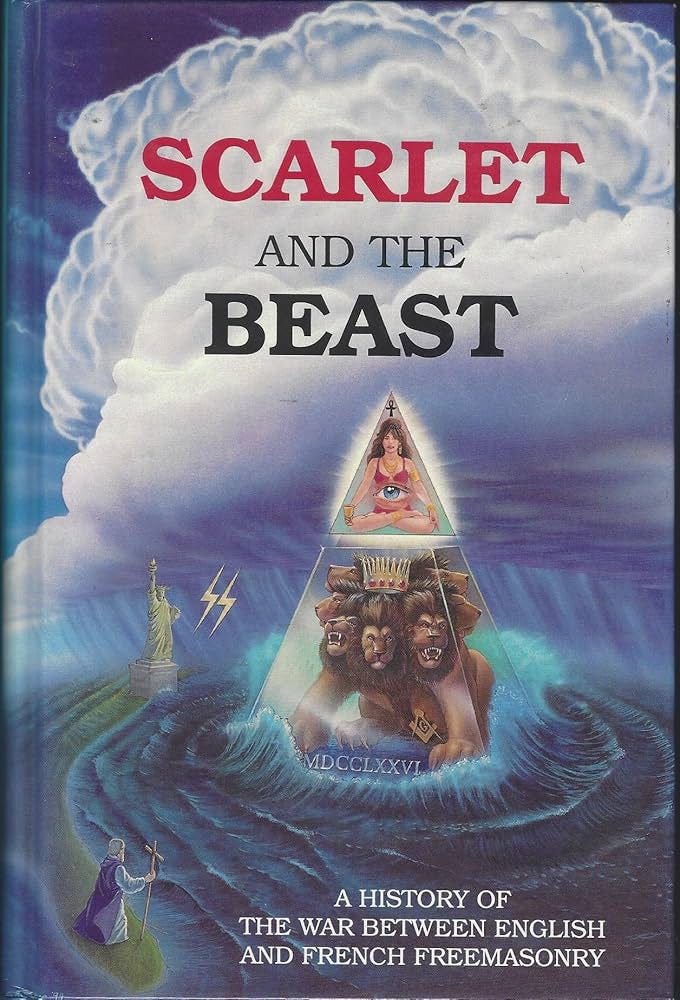
The ideas of the reformation can be found in figures long preceding the actual conflicts of the religious wars. It was the threat of a new Spanish empire, ruled over by the powerful Habsburg dynasty that lead the northern nations to hasten its doctrinal separation from the church. Especially the fall of Constantinople and the completion of the reconquista consolidated a new powerful block dominating the entire south of the continent. The predecessor of modern statehood was forming on both ends, accompanied by the Jesuits and Masons alike, despite their rivalry.
The reformation was not a one-way street towards more religious freedom and tolerance but quite the opposite. The first versions of reformist belief were expressed in intense religious fundamentalism. Europe threatened to disintegrate due to various wars of religion fought in France and Germany. Just as the seemingly contradictory movements of the Masons and Jesuits had a common origin, we will find that the zealots of the reformation were deeply intertwined with the secularists of modernity. Evangelicalism and Illuminism are yet to take centre stage.