
Abraham's Curse
The deep recesses of history keep encroaching on us.

The holy land is in turmoil. Every five centuries or so, all three major Abrahamic religious appear to get into violent conflict over this particular piece of land. Each time the alliances change. During the crusades, Jews would flee into Muslim-controlled areas in order to escape the violent invasion of the crusaders. At the same time, however, both Jews and Muslims were able to coexist with Orthodox Christians under Islamic rule. Today, the allegiances seem to have changed, as Judaism has positioned itself to be part of a combined Judeo-Christian civilisation opposed by an increasingly hostile political Islam. Beneath the surface of all of these conflicts lies the fact that all three of these religions venerate a common ancestor: Abraham.
The officially accepted lineages of divine revelation by each religion can be attributed to a list of prophets that each accept or reject. Jesus Christ was a first point of departure in which Judaism split from Christianity. Jesus, as well as the followers of Christ were originally Jews themselves, after which their faith was Romanised and spread among the pagans. Later, the various diverging interpretations and versions of Christ-worship were streamlined and corrected by the prophet Muhammad in his quest to deliver the final prophecy. Muhammadism, originally seen as another heresy of Christianity, later established itself as the last great Abrahamic faith, dominating much of the world during the middle ages.
Whilst Moses is regarded as a prophet by all three religions, the focus on him is mostly carried by the Jews, he is said to have specifically liberated the Israelites from Egyptian captivity, hence serving as a national hero. The Ishmaelites, seen as the ancestors of the Arabs, had long before branched off from this lineage and hence Abraham serves as a true common prophet for Jews, Christians and Muslims alike.
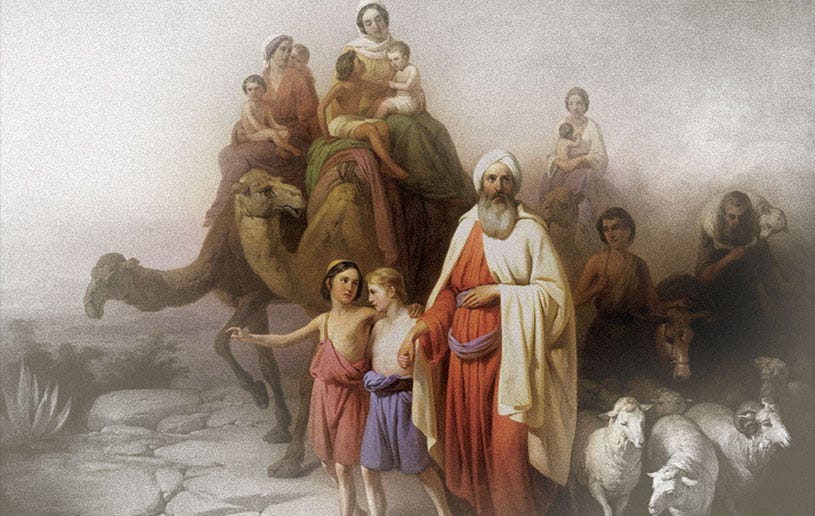
Abraham is known for an event that did not happen. This will be the theme of this article: religion and its relationship to events that deviate from the expected trajectory of prophecy. Abraham did not kill his son. God had commanded to sacrifice his son, human sacrifice having been a common practise during those days. However, in the final moment, God stopped Abraham and prevented it from happening. This way, father Abraham, called to God’s services at an old age, was tested for his faith. The blind obedience to God’s wishes was rewarded with him being able to keep his only son.
And when his Lord tried Abraham with words and he fulfilled them, He said, ‘Indeed, I will make you a leader for the people.’
Quran 2:124
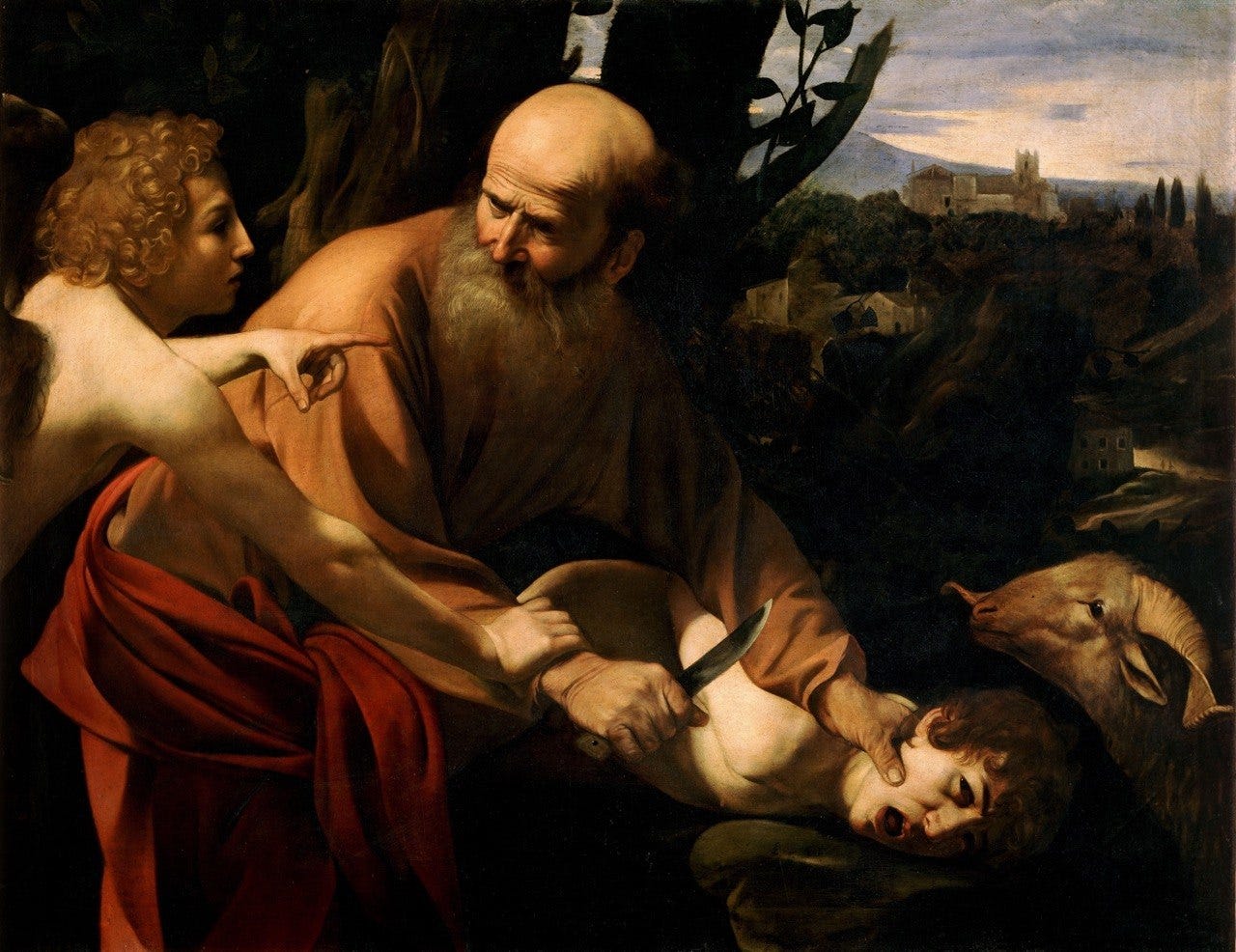
Abraham was promoted to his name after originally being called simply Abram. Other figures in the old Testament were given similar upgrades to their names, such as Jacob being renamed Israel after he wrestled with God. These promotions represent elevations of regular humans to the status of prophets, remarkable men that reveal commands and plans of the almighty to the people when the time is right. Originally the people meant simply the children of Israel. Christianity was the first promotion that went beyond that. Not only was the prophecy of Christ intended for all people, irrespective of their tribe, but this prophet was identified as the Son of God.
In this sense, the crucifixion could not simply be regarded as a simple execution, but represented a sacrifice, hence the metaphor of the Lamb of God. Not only was it a sacrifice, but it was the response to the sacrifice of Abraham that did not take place. Since the days of the old father, animal sacrifices had taken the place of Abraham’s son, until the body of Christ came to be the ultimate human sacrifice. Due to this significant arc in the story of the bible, Christ came to be seen as the Messiah, the chosen one. However, instead of the people making an ultimate sacrifice to God, the roles were reversed and it was God that sacrificed his only son for the people.
Now to Abraham and his seed were the promises made. He saith not, And to seeds, as of many; but as of one, And to thy seed, which is Christ.
Galatians 3:16
The arrival of Christ became the next great event that did not take place. At least not for the party of remaining Jews, following the teachings of the Pharisees and Sadducees. In their view, the Messiah would be a warrior-like figure that would liberate the Jews from the yoke of Roman rule and would help establish a new kingdom for the Jews. In other words, these Israelites were holding on to the tribal exclusivity of their prophecy. Christ had to be seen as an impostor and hence the curse that had put the children of Israel into hardship and repeated persecution was renewed by the curse brought upon them due to their denial of Christ’s divinity.
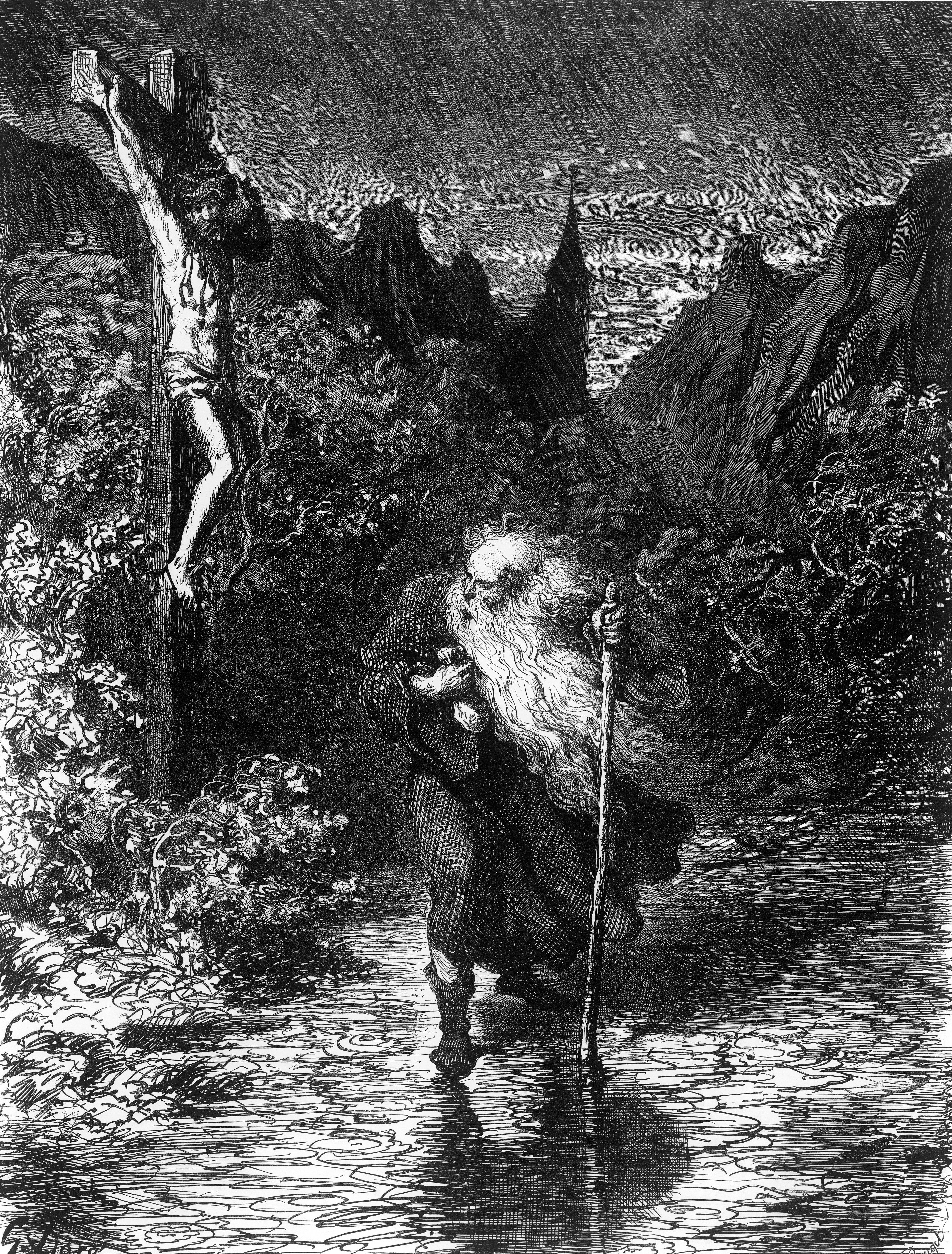
The legend of the eternal wandering Jew exemplifies this curse: Those among the Jews who rejected Christ as their messiah were fundamentally different from the pagans. The pagans stood outside the dialectic of Abrahamic prophecy and were later converted into it. The Jews, however, had to actively refuse their salvation and were thereby condemned to keep preserving their tradition and existence whilst being homeless, wandering and subject to the persecutions and whims of Christian and Muslim rulers. The world had inverted, instead of the children of Israel being exclusively salvaged and liberated by their Messiah, he condemned them and turned them into the exclusively cursed people.
This nature of inversion later turned out to be inherent in Christianity. Originally, the Christian doctrine had emerged out of a chaotic tapestry of various Levantine mystery cults. The Marcionites, Gnostics, and others read the same old testament texts but often arrived at opposite conclusions than the Christians: Some regarded the God Jahwe as an evil impostor God that had caged humanity in the garden of Eden. Christ, in the form of the snake, liberated Adam and Eve by bringing them the light. The bringer of light is often referred to as Lucifer.
How art thou fallen from heaven, O Lucifer, son of the morning! how art thou cut down to the ground, which didst weaken the nations!
Isaiah 14:12
This duality of Christianity was frequently expressed by the persistent heresies of the early and high medieval periods. At times, the doctrine known as Manicheism became the most dominant Christian-adjacent religion. Manicheans, alongside Catharism and Bogomilist teachings all expressed similar ideas about Christ having an evil twin either being the devil or having a similar name like Satanael. The duality of Christ has arguably contributed to the modern form of secularism that we are familiar with today. Modernity is not simply a departure from Christian religiosity, it is an active inversion of it. Buddhists or Hindus are not capable of being secular in the sense that an originally Christian society can be.
We godless and anti-metaphysical, still take our fire from the conflagration kindled by a belief a millennium old.
Nietzsche, The Gay Science / The Joyful Wisdom, §344.
The vehement rejection of the Church during early modernity, known as the reformation, could not help itself but become part of its own self-fulfilling prophecy. To a certain extent, all revelation is self-fulfilling. The end times are to bring a return of the Messiah alongside the establishment of a new Jerusalem. At the same time, the Jews are still awaiting the first arrival of their Messiah. At this point, almost definitionally, they have become the waiting people, as throughout history, several mass apostacy events would occur (most notably the rise of Sabbatai Zevi in 1666), where a large segment of Jewish society would simply follow some Messiah figure.
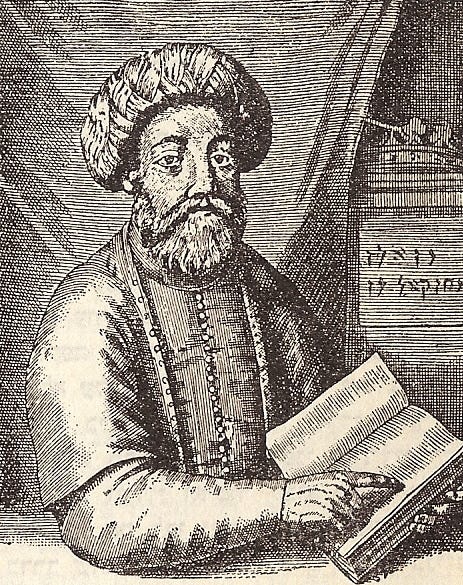
The end times are also characterised by an event that did not happen. Christ has not returned. And even if so, it is unclear whether he would be recognised as the Messiah by today’s remaining Jews or whether their Messiah is going to be the prophesised Antichrist that arrives before Christ to first plunge the world into darkness, deceiving its inhabitants. Despite the vast secularisation that had also captured Jewish society, these end times brought about a New Jerusalem. Ironically, it was the secular nineteenth century doctrine of ethnic nationalism from which Zionism arose.
In the meanwhile, Islam was building itself up to become the unifier of the prophecies, bringing all of the diverging accounts of God into a singular framework. The laws of the kingdom were refined and declared for all people, not only the children of Abraham. Simultaneously, the prophecy of Christ was explained and it was confirmed that he had been indeed the Messiah and his return would signify the end times. Everything was perfectly aligned if there hadn’t been the event that didn’t happen.
During the first Fitna, the civil war between the successors of the prophet Muhammad, the chosen heir to the caliphate, Ali ibn Abi Talib, Muhammad’s son-in-law, was destined to be the head of the Ummah. Instead, he was unable to prevail against Muawiya, the general that would eventually become caliph and establish the Ummayad dynasty. Ali chose to reach a compromise with Muawiya, but this enraged some of his most radical initial supporters, known as the Kharijites, who ended up murdering Ali. They murdered the chosen heir himself for breaking with prophecy. They punished him for not following his destined path. They attacked him over something that did not happen.
Now the paths of Islam diverged. The followers of Ali, know as the Shiites, similar to the Jews went through regular waves of apostacy, where each founded their own deviation from the Sunnah or orthodox Islam based on the alleged lineage of Imams descending from Ali, and ultimately from the prophet Muhammad. First, the Fatimids broke off and founded their sect based upon the sixth Imam. Later, the seventh Imam was regarded as the last one before the lineage of successors broke. Ultimately, the prevailing form of Shiism follows the twelve-Imam doctrine, where the twelfth Imam, al-Mahdi never died but entered occultation, a state of hidden retreat from the visible world, until he would return together with Christ at the end times.
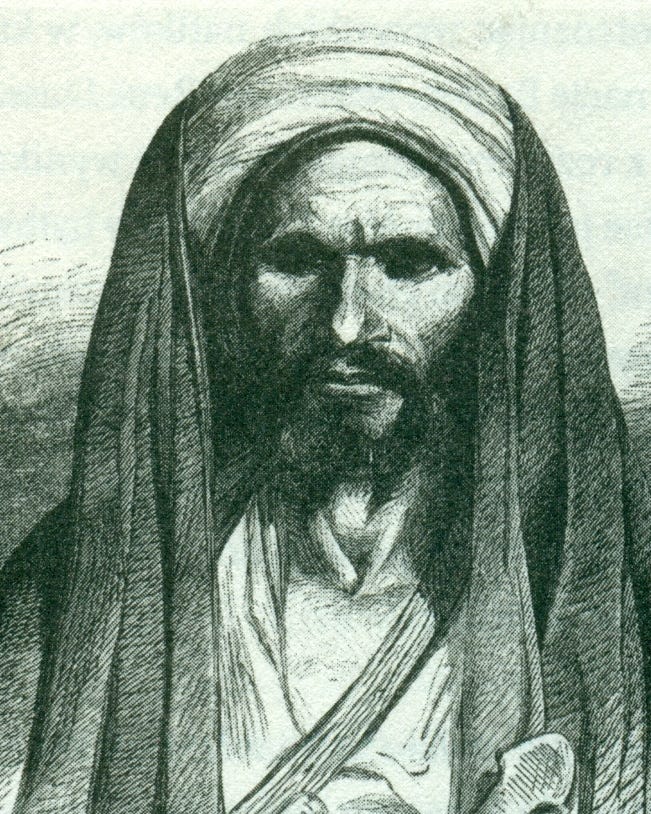
Within Jewish mysticism, we can find a similar doctrine, where the Messiah is seen as already living among us, but being invisible to the people until he reveals himself when the time is right. According to the Muslims, Shiites and Sunnis alike, the Mahdi and Christ will together fight the forces of Dajjal, the Antichrist.
Today, all of these narrative threads are converging again, climaxing in a crescendo of religiously charged events in the modern Middle East. The party of Ali exists to this day and is represented by a spiritual leadership in Najaf (Ayatollah Sistani), modern day Iraq, and a political leader in the person of the grand Ayatollah of the Islamic Republic of Iran. Moreover, the entire Ummah in the region is burdened by Abraham’s curse in the form of the returning issue of the Kharijites. Various forms of Salafism, a modern newfound radical orthodoxy, dominated by Saudi-funded Wahabis, have focused their energy in fighting other Muslims and their governments, whether it be secular Arab leaders or Shias in Syria and Iraq.
Despite anything Western media (especially establishment conservative outlets) will tell us, the political fault lines are not a simple as Judeo-Christians vs Islamists. The enemies of Israel are largely supported and funded by the Shiites in Iran, whilst one of the Shiites main opponents are Daesh or the Islamic State in Syria and Iraq (ISIS). ISIS has previously accidentally bombed Israel and apologised for it XXX. The Wahabi doctrine, dating back to Ibn Abdel-Wahab, promotes a zero-tolerance policy towards Muslims who engage in any form of innovation or deviation from the true doctrine of Tawhid, or the oneness of God. In their fury, they consider their fellow mislead Muslims as a greater enemy than the Kuffar or non-Muslim foreigner. This is why we can historically observe the Wahabi Saudis allying with the British (and later with the Americans) to fight their fellow Muslims.
In Israel, the Temple Institute exemplifies their attitude towards the end times perfectly as they intend to build the third temple by genetically engineering the red heifers that are described in the holy texts as the required sacrifices for the temple. The Evangelicals in the United States wholeheartedly support the Israeli right wing’s pursuit of building the third temple. Despite the fact that this will mean that most Jews are either killed or converted during the end times, a clear symbiosis has been emerging between the US evangelicals and the new right wing of Israel. The originally ethnonationalist basis for both the US right and the Israelis has turned into this postmodern form of messianism. At the same time, both of these factions have on various occasions supported, financially and militarily, the neo-Kharijite forces of the Wahabi persuasion.
What does a red heifer have to do with any of this? Perhaps it would be difficult for some to believe that a cow could be so important. But in truth, the fate of the entire world depends on the red heifer. For G-d has ordained that its ashes alone are the single missing ingredient for the reinstatement of Biblical purity - and thereafter, the rebuilding of the Holy Temple.
At this point, several parties are involved to intentionally escalate the conflict towards some kind of biblical resolution. The radicals among the Israelis would like to hasten the arrival of the Messiah, someone the Evangelicals may identify with Christ, but which Muslims and some Orthodox and Catholic Christians may identify with Dajjal, or the Antichrist. Conversely, the promised return of the Mahdi may be seen by some Evangelicals as the Antichrist, whilst Shiites especially regard true Christianity to be an ally in the struggle against Satanic Zionism.
These are dynamics that are simultaneously ancient and at the same time so characteristically postmodern that the secular society of modernity cannot truly comprehend them whilst also reinforcing them. While Jews, Christians, and Muslims all believe in the end times bringing a global empire, ruled by the chosen one in peace and harmony with God, the secular order has already achieved a global hegemony of liberal modernity.
The post-Holocaust world after the second world war learned two different lessons from the horrors of the concentration camps: This could not happen again, hence the world needed to be cleansed from nationalist chauvinism of any sort. Secondly, this could not happen again, hence the Jewish people needed to be armed and able to defend themselves in their homeland (ergo they were exempt from the ban on chauvinist nationalism). This inherent contradiction has devolved into the neo-Protestant evangelism of global liberalism and democracy having prompted an imperial expansion into the Middle East alongside some short-sighted support for the Wahabis. But most importantly, the legacy of the Holocaust reinforced the Jewish identity of an otherwise increasingly irreligious diaspora. Another one of those events.