
A New World Order
Time and Space rearranged themselves behind the Scenes long before Modern Science Reared its Head.

There are decades where nothing happens; and there are weeks where decades happen.
Unknown. (allegedly Wladimir Lenin)
The old world is dying, and the new world struggles to be born: now is the time of monsters.
Also Unknown. (though allegedly Antonio Gramsci)
We all notice when an era comes to an end, though we never know what it means and nobody can predict when it will happen. But once it occurs, we cannot miss it. Everything changes. A new world is born and the old world dies off, fading into memory until it becomes something historians reconstruct from remaining artefacts. The biggest issue we face when trying to explain what exactly happened when monumental transitions came about, is the fact that often it is simply impossible to find a clear causality. Forces were at play that had been dormant for centuries, sometimes even millennia. Many of these influences have never been studied or they interact with each other in such complex ways that it becomes impossible to disentangle them. Most importantly, the fact that we are still living in the era we are talking about disables us from taking on an outside standpoint and mitigating the limitations of our biased perspectives.
The ‘antiquities’ preserved in museums (household gear, for example) belong to a ‘time which is past’; yet they are still present-at-hand in the ‘Present’. [...] What is ‘past’? Nothing else than that world within which they belonged to a context of equipment and were encountered as ready-to-hand and used by a concernful Dasein who was-in-the-world. That world is no longer. But what was formerly within-the-world with respect to that world is still present-at-hand. As equipment belonging to a world, that which is now still present-at-hand can belong nevertheless to the ‘past’.
Heidegger, Martin. Being and Time. Translated by John Macquarrie and Edward Robinson. Oxford: Blackwell, 1962. [8]
I am of course speaking of modernity, an age that refers to itself as the new age. It has a clear temporality, as it not only describes itself the present age but it also distinguishes itself as the future of past ages. In this, it is progressive. It moves away from the past, not only in the colloquial sense of the general flow or passing of time, but the conscious and active effort of moving away from historical burdens and previous constraints towards a more desirable utopia. This utopia is no longer situated in a world outside of the material realm. We are not anymore at the mercy of a judgemental God that would permit or deny us from paradise after our deaths. Instead, it is the genius of man, the sophistication of science and technology that will allegedly bring about this utopia here on earth.
For amongst the excellent acts of that king, one above all hath the preeminence. It was the erection and institution of an order, or society, which we call Salomon’s House, the noblest foundation, as we think, that ever was upon the earth, and the lantern of this kingdom. It is dedicated to the study of the works and creatures of God [...] The end of our foundation is the knowledge of causes, and secret motions of things; and the enlarging of the bounds of human empire, to the effecting of all things possible.
Bacon, Francis. New Atlantis. Edited by Gerard B. Wegemer. Irving, TX: CTMS Publishers at the University of Dallas, 2020. [1]
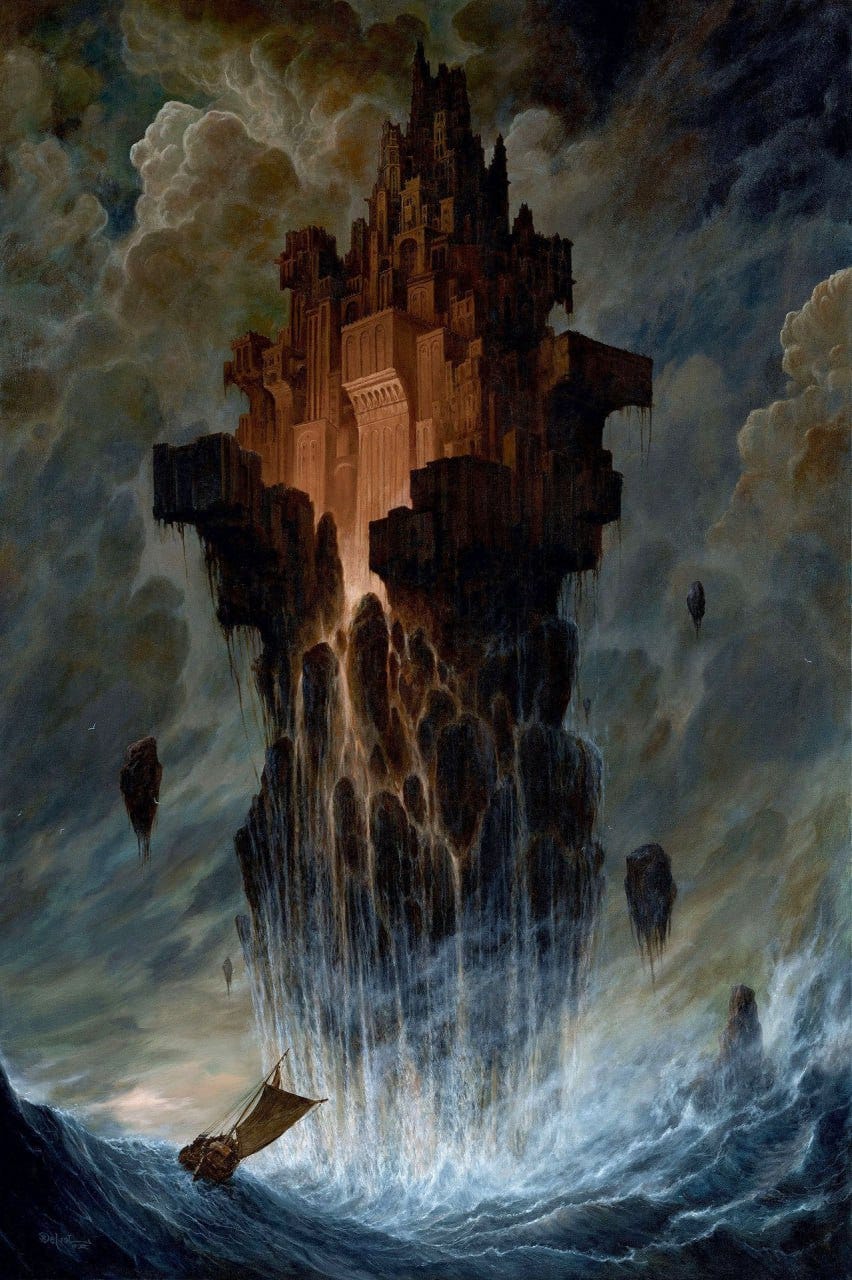
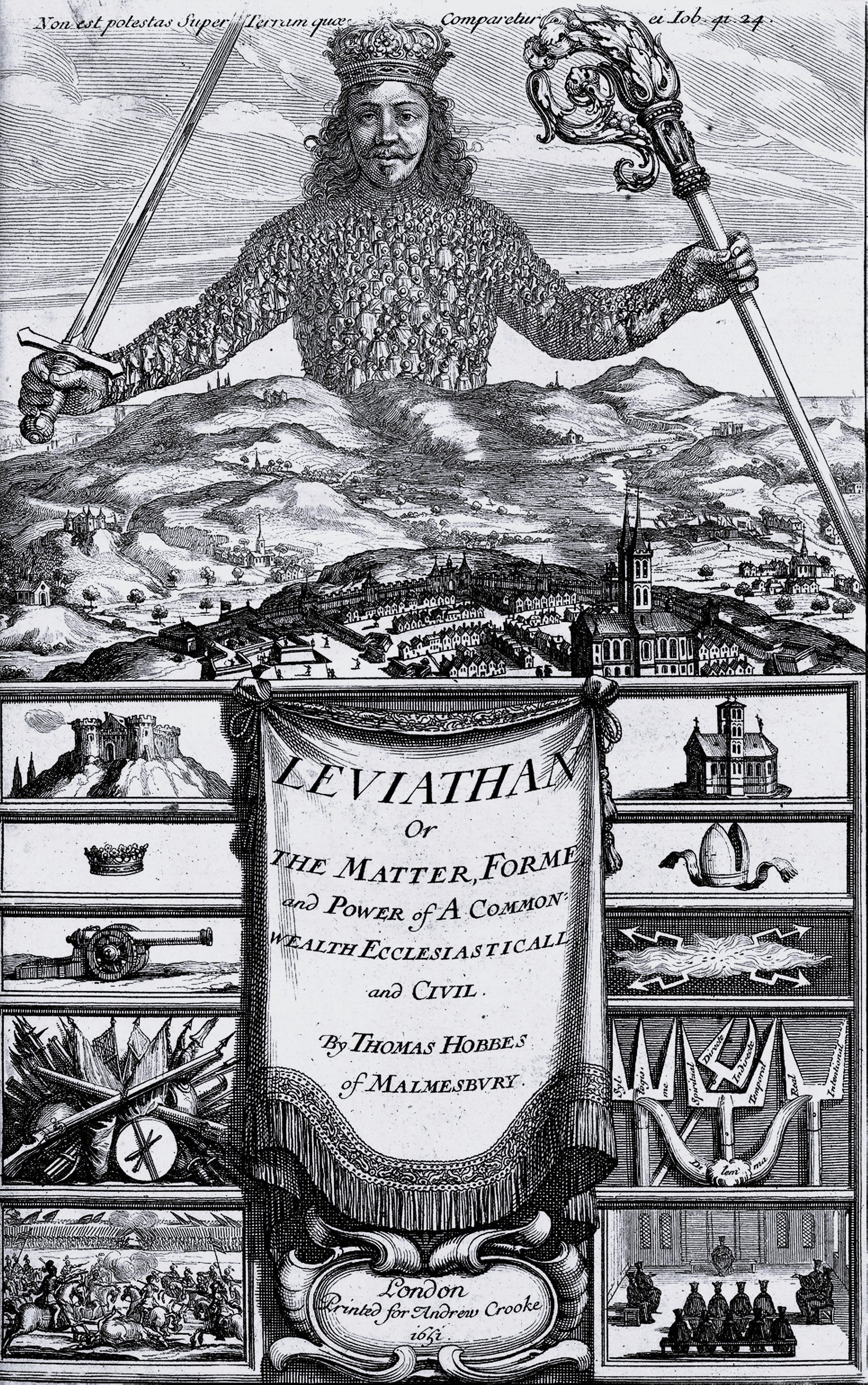
Initially, God still played a role in science as the ultimate demiurge, the mere configurator of the laws of physics, the first cause that wound up the cosmic clock, and from there, let the world take its course on its own according to its mechanistic laws. The idea of divine intervention was transferred to the intellect of man, who came to be seen as increasingly all-powerful thanks to the advances of technology. God was replaced by the Leviathan, the cybernetic conglomeration of people and machines that was forming and growing into the Megamachine of the millennium, a system that now stretches its tightly knit web across the entire globe.
Hobbes’s blasphemy was his vision of a diffuse intelligence that was neither the supreme intelligence of God nor the individual intelligence of the human mind. Leviathan was a collective organism, transcending the individual beings and institutional organs of which it was composed. Human society, taken as a whole, constituted a new form of life, explained Hobbes, ‘in which, the Soveraignty is an Artificiall Soul, as giving life and motion to the whole body; The Magistrates, and other Officiers of Judicature and Execution, Artificiall Joynts; Reward and Punishment [...] are the Nerves [...] The Wealth and Riches of all the particular members, are the Strength; Salus Populi [...] its Businesse; Counsellors [...] are the Memory; Equity and Lawes, an artificiall Reason and Will; Concord, Health; Sedition, Sicknesse; and Civill war, Death.
Dyson, George B. Darwin among the Machines: The Evolution of Global Intelligence. Reading, MA: Perseus Books, 1997. [6]
With this new ‘megatechnics’ the dominant minority will create a uniform, all-enveloping, super-planetary structure, designed for automatic operation. Instead of functioning actively as an autonomous personality, man will become a passive, purposeless, machine-conditioned animal whose proper functions, as technicians now interpret man’s role, will either be fed into the machine or strictly limited and controlled for the benefit of de-personalized, collective organizations. […] Two devices were essential to make the machine work: a reliable organization of knowledge, natural and supernatural; and an elaborate structure for giving orders, carrying them out, and following them through. The first was incorporated in the priesthood, without whose active aid the institution of divine kingship could not have come into existence: the second, in a bureaucracy. Both were hierarchical organizations at whose apex stood the high priest and the king. Without their combined efforts the power complex could not operate effectively. [...] Secret knowledge is the key to any system of total control. [...] Today the language of higher mathematics plus computerism has restored both the secrecy and the monopoly, with a consequent resumption of totalitarian control.
Mumford, Lewis. The Myth of the Machine, Volume One: Technics and Human Development. New York: Harcourt Brace Jovanovich, 1967. [14]
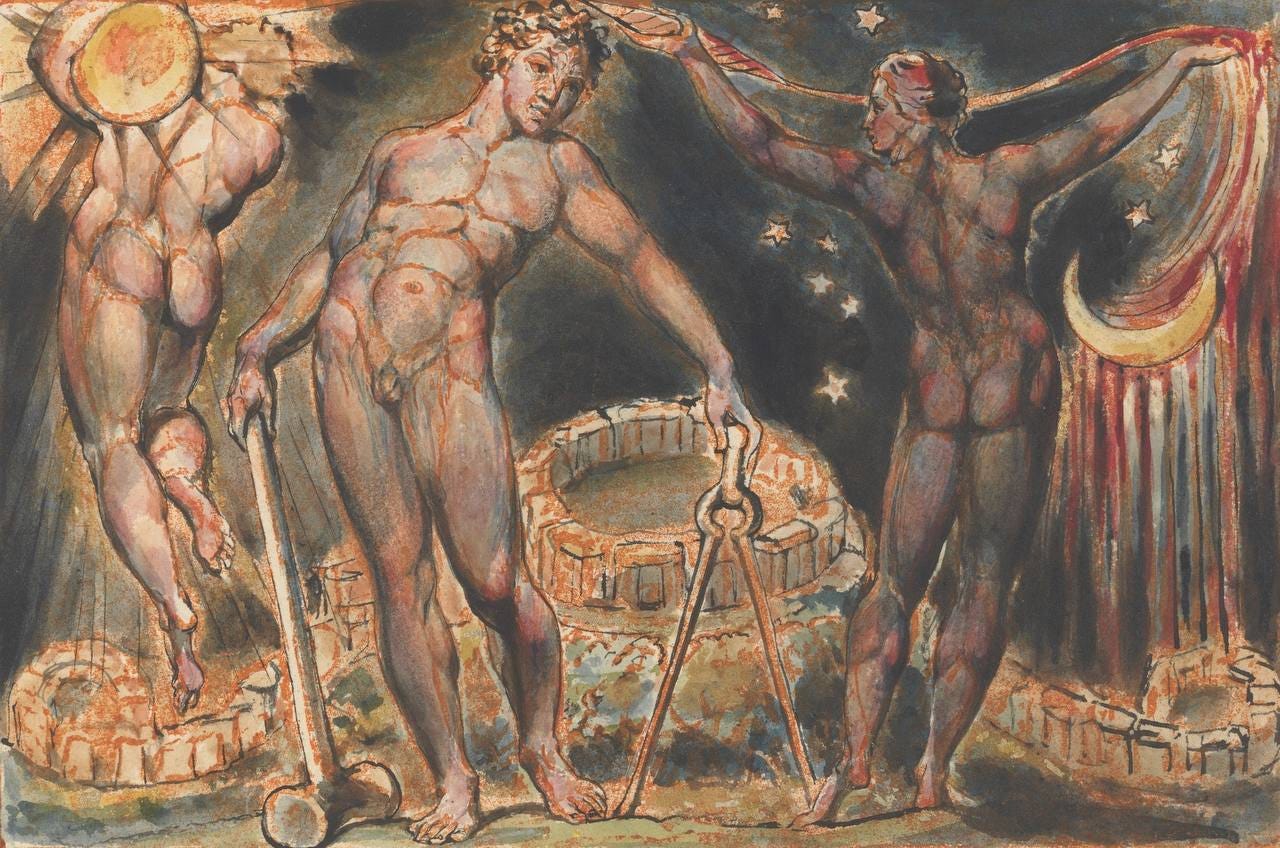
As we are still entangled within and bound by the terminology of modernity, we often cannot help ourselves but portray history through the lens of relentless progress. The scientific revolution, the enlightenment, renaissance, and reformation all came about as steps along the way from medieval ignorance towards modern prosperity, reason, and freedom. We no longer wait for the return of the messiah. For many of us, the messiah simply did not come and we were left with the end times without a new Jerusalem. Therefore, the misery left behind after the second fall of Rome (i.e. the Catholic Church) opened up another timeline, one where man realises his potential by shaping his own destiny. This did not do away with religion or Christianity, not in the least. It supercharged it with a new vigour, allowing Christians to take matters into their own hand and bring about the end times on their own terms. If Christ was not going to build the New Jerusalem, we would build it for him until he arrives.
Modern man, or Faustian man has deluded himself. He is not a rational animal, a being that is unshackling himself from previous ignorance. Instead, he is steeped in ignorance, misled by superstition and must understand that the dawn of modernity was not what it is often purported to be. We are indeed dealing with a new age, but in a much deeper and much less straightforward sense. Historians can focus on specific events like the fall of Constantinople, the discovery of America, or Martin Luther, but the real traces of what happened to our world are encoded in the fabric of time and space that had begun to unravel.
Movement on these paths we call Progress. This was the great catchword of last century. Men saw history before them like a street on which, bravely and ever forward, marched ‘mankind’ — meaning by that term the white races, or more exactly the inhabitants of their great cities, or more exactly still the ‘educated’ amongst them.
But whither? For how long? And what then?
It was a little ridiculous, this march on infinity, towards a goal which men did not seriously think about or clearly figure to themselves or, really, dare to envisage — for a goal is an end. No one does a thing without thinking of the moment when he shall have attained that which he willed. No one starts a war, or a voyage, or even a mere stroll, without thinking of its direction and its conclusion.
Spengler, Oswald. Man and Technics: A Contribution to a Philosophy of Life. Translated by Charles Francis Atkinson. New York: Alfred A. Knopf, 1932. [17]
The confines of time and space were ripped open. It became undeniable that we were no longer caged in, the universe was not actually a sphere enclosing our planet. Nor was time limited by the end times, and perhaps not even limited in the past by creation. An unimaginable vastness opened up of which the disruptiveness could only be matched by the impact that the Abrahamic faiths had previously brought onto the decaying ancient world. From amidst a medieval kind of scholarly Gnosticism, known as Scholasticism, emerged a new religion, a nameless one that rules us today. Just like the Gnostics, the Scholastics were the last remnants of a bygone era. They lived at the precipice and gave way to an enlightenment, a transformation that was initially brought to Europe by Christ’s disciples, and was now ushered in by the scientists.
Die These, die hier vertreten werden soll, nimmt den behaupteten Zusammenhang von Neuzeit und Gnosis auf, aber sie kehrt ihn um: Die Neuzeit ist Überwindung der Gnosis. Das setzt voraus, daß die Überwindung der Gnosis am Anfang des Mittelalters nicht nachhaltig gelungen war. Es schließt ein, daß das Mittelalter als Jahrhunderte überspannende Sinnstruktur von der Auseinandersetzung mit der spätantiken und frühchristlichen Gnosis seinen Ausgang genommen hat und daß die Einheit seines Systemwillens aus der Bewältigung der gnostischen Gegenposition begriffen werden kann.
[EN]
The thesis to be advanced here takes up the alleged connection between modernity and Gnosticism, but reverses it: modernity is the overcoming of Gnosticism. This presupposes that the overcoming of Gnosticism at the beginning of the Middle Ages had not been lastingly successful. It also implies that the Middle Ages, as a structure of meaning spanning centuries, took its point of departure from the confrontation with late-antique and early-Christian Gnosticism, and that the unity of its systematic will can be understood as an attempt to master the Gnostic counter-position.
Blumenberg, Hans. Die Legitimität der Neuzeit. Erneuerte Ausgabe. Frankfurt am Main: Suhrkamp, 1996. [2]
The middle ages were not unscientific, nor were they irrational or superstitious. Galileo Galilei was not the inventor of science, but a rebel against the scientific establishment of his time. He was not an atheist and he also did not deny the role that God played in the cosmos. Thomas Kuhn explains this clearly in his analysis of the scientific revolution. He interprets the history of scientific development to have moved through paradigms, meaning that despite the idea that theories need to be verifiable or falsifiable, certain periods will exhibit fundamental assumptions within science that are held onto despite their lack of falsifiability. In other words, the explanatory power that certain unproven assumptions lend towards theorems is useful enough to warrant the continued faith in these assumptions, despite apparent insufficiencies or contradictions among them. Oftentimes there is not yet a new set of assumptions to replace the old ones and improve on them. Only at the right moment, when the outlines of an emerging new paradigm can be sensed, and when the old paradigm is beginning to crack under the weight of its accumulated inconsistencies, does the dam break and we witness a paradigm shift.
Not only did the late medieval scholars have a rational model of nature, they also vividly debated over the relevance of metaphysics and the need for empirical rigour in their research. William of Ockham, a representative of the Nominalist school of thought within Scholastic discourse, denied the existence of universals, meaning that beyond specific round or flat objects, he denied the real existence of ‘roundness’ or ‘flatness’. The assumption that universals were not real as they were merely in the mind implied a clear superiority of the concretely observable (perhaps even proto-Empirical) environment over metaphysical categories and abstract speculation. Later representatives like Nicholas of Autrecourt took this even further and expressed general scepticism over Aristotle’s notions of substance, time and space. As a precursor to David Hume, Autrecourt even expressed the idea that our understanding of the world rests on probabilities derived from experience. Individual, discrete observations in time and space were seen as the only real elements, from which we constructed a time and space continuum in our mind.
The ideas which Nicholas of Autrecourt upheld [...] form a striking instance of the sceptical tendency that had gradually arisen as a natural consequence of the subtle and searching logic of Scholasticism; at the same time they fully justify the fact that Nicholas of Autrecourt has sometimes been styled the medieval Hume. […] On account of his acceptance of atomistic ideas, Nicholas of Autrecourt is mentioned in all works on the history of science, but he is often pictured as a man who formed a striking exception to the thought of his time. There was nothing exceptional, however, either in his scepticism about the possibility of proving religious truths — with the sharp divorce between religion and science and the absolute rejection of the Aristotelian-Thomistic philosophy that resulted from it — or in his advocacy of a more unbiased observation of natural phenomena.
Dijksterhuis, E. J. The Mechanization of the World Picture: Pythagoras to Newton. Translated by C. Dikshoorn. Princeton, NJ: Princeton University Press, 1986. [5]
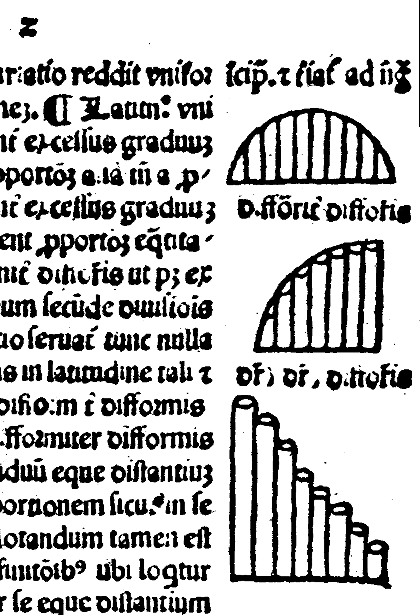
Scholastic figures like Buridan and Oresme were already developing physical theories on impetus (an ancestor of the notions of impulse and inertia), movement and acceleration. Mathematics was gradually being introduced as the language and grammar of science. The merger of geometry and arithmetic, solidified by the re-emergence of Euclid’s Elements in the common curriculum, was applied to motion and the computation of velocity and acceleration. What was missing? If these medieval scholars were well on their way to develop modern science, why did they need to be overthrown and what role did Galilei and others play in this?
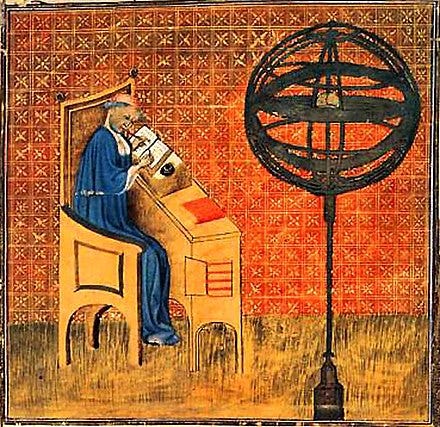
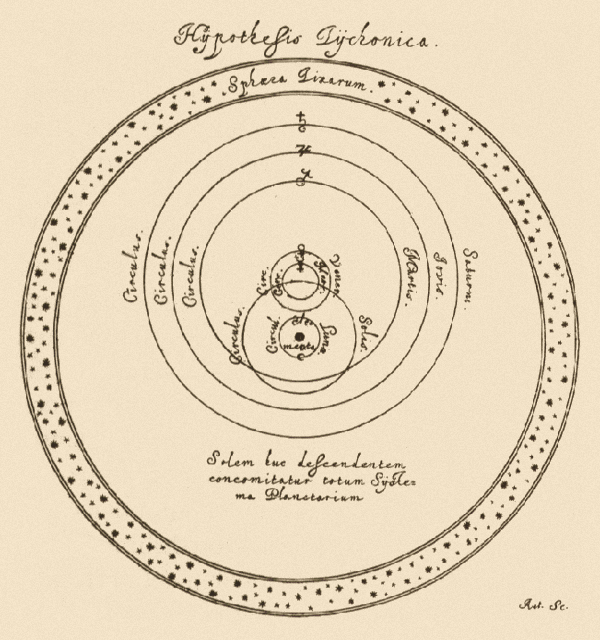
As explained by Kuhn, a scientific paradigm does not simply collapse as soon as some inconsistencies are found. Even if more powerful ideas and theorems are discovered, they still do not suffice to fundamentally topple the predominantly held presuppositions among the intelligentsia. Instead, what is required is a combination of a fertile breeding ground for a new paradigm and a cataclysmic trigger that strikes at the weakest point of the hitherto prevailing paradigm. In the case of the famous scientific revolution the fertile breeding ground was provided by a combination of factors. The rise of universal literacy, accelerated by the printing press, in conjunction with the emergence of free city states that had the funds to financially support the work of artists and scholars, proliferated a widespread culture of independent research and study. Naturally, the reformation was part of this overall development where independence meant that one no longer adhered to the mandate of accepted Scholastic teachings. The triggering event that would give the Scholastic establishment its final blow was the shattering of the geocentric world model.
Thus the impetus theory produced a small but important step toward what we should now call the relativity of inertial motion, and this trend was very much reinforced by the astronomical speculations which occurred during this and later periods. From the fourteenth century on, a number of important scholastic thinkers suggested, normally on a speculative or mystical basis, that the earth was like the other planets and that it moved, and these developments provided a conceptual basis for the technically more complete astronomical revolution proposed by Copernicus in the sixteenth century.
Kuhn, Thomas S. “The Foundations of Dynamics.” In The Quest for Physical Theory: Problems in the Methodology of Scientific Research, edited with an introduction by George A. Reisch, 21–40. 2021. Lowell Lectures, delivered March 1951. [11]
The Aristotelianism of the medieval Scholastics was not as superstitious and inflexible as many would have us believe. In fact, Galilei did not outright reject Aristotle, but even claimed that the Greek philosopher would have adapted to the empirical observations that were made possible by the telescope. Whilst it was possible to adapt definitions of motion, it was too much of a deligitimisation of the Scholastic model if they had to admit that their entire view of the universe had been false. For the opposing side, there was less of an issue, as there was no united scientific or reformist front. There was a colorful range of thinkers that were often disputing each other. The correct ones only needed to be among them to eventually emerge as the successors of the old regime. It is easily forgotten that the early enlightenment era was a chaotic mess of people promulgating all kinds of radical ideas and theories, most of which were likely insane. But it is exactly this dynamic that is found in any kind of major discontinuous transition of an evolutionary system. The old paradigm exhausts itself, becomes stale, as exemplified in the epicycles of the geocentric world model, where each planet’s trajectory became so hopelessly complicated that the paradigm was bound to collapse under its own weight.
Auch entwickeln sich diese Lebewesen nicht systematisch hin zu größerer Komplexität. Alle Entwicklungsrichtungen stehen ihnen offen, auch die zu geringerer Komplexität, nur dass die Organismen in diesem Fall von dem Berg an Mikroorganismen schlichtweg absorbiert werden und nur im entgegengesetzten Fall als hochentwickelte Lebewesen aus dem Naturgemälde herausstechen. Solche komplexen Lebewesen existieren durchaus, aber der Eindruck, dass die Evolution als eine Fortschrittsgeschichte statthabe, verdankt sich einer optischen Täuschung. Wir sind nicht die Krone der Schöpfung, sondern die Außenseiter, während das Reich der Bakterien triumphiert.
[EN]
These living beings also do not develop systematically toward greater complexity. All developmental directions are open to them, including toward lesser complexity; only in that case the organisms are simply absorbed into the mountain of microorganisms, whereas only in the opposite case do they stand out from the natural tableau as highly developed living beings. Such complex living beings certainly do exist, but the impression that evolution takes place as a story of progress is due to an optical illusion. We are not the crown of creation, but the outsiders, while the kingdom of bacteria triumphs.
Schlaudt, Oliver. Das Technozän: Eine Einführung in die evolutionäre Technikphilosophie. Frankfurt am Main: Vittorio Klostermann, 2022. [16]
